


Manhattan · co-ops, condos & lofts
Hardwood floor staining & finishes in Manhattan
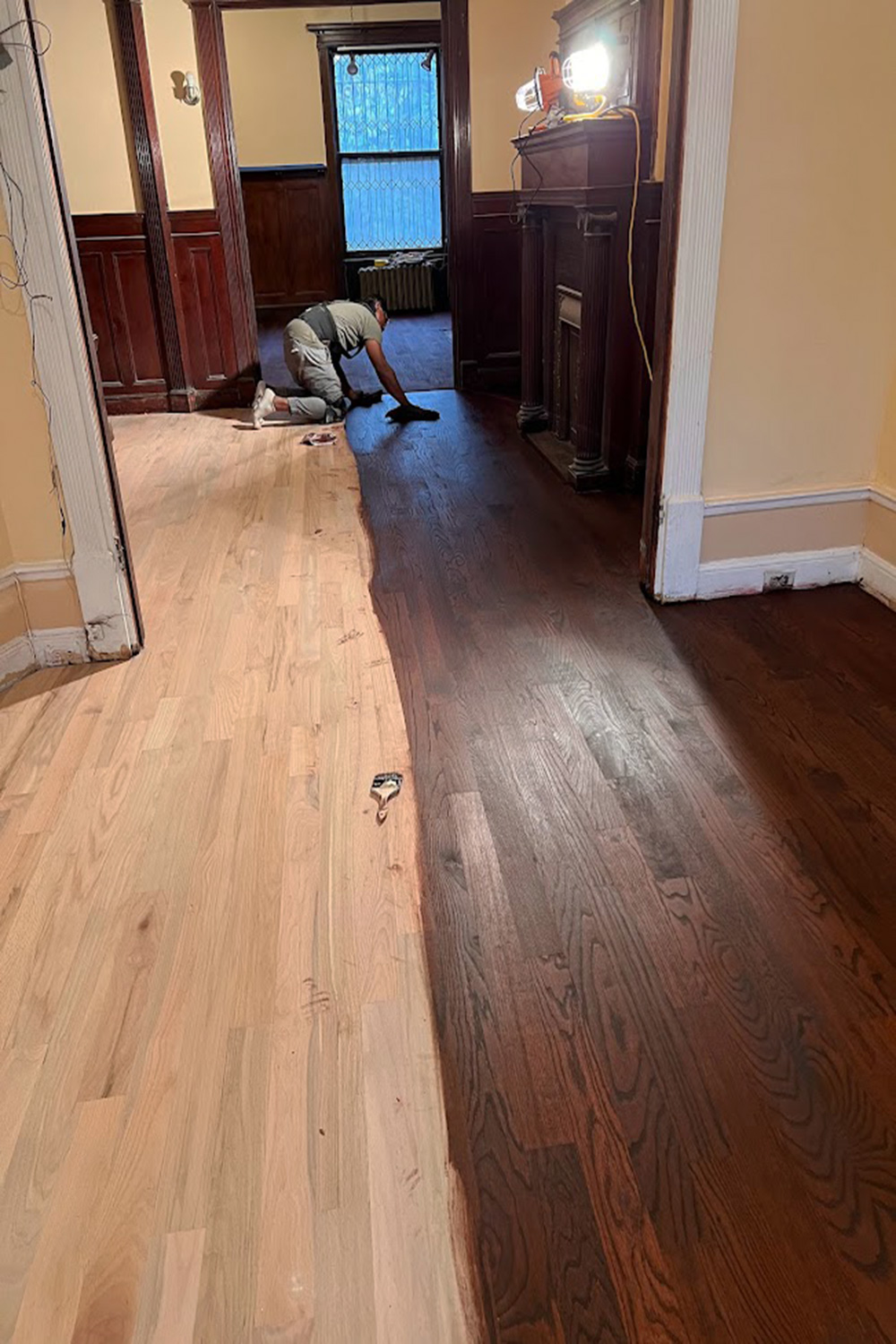
Stain sets the mood of a refinished floor as much as the sheen. We test colors on your own floor in Manhattan before the full field is stained. Gemini Floor Services is a family-owned flooring company, and you work directly with the flooring contractor from the first visit to the last room. Call (718) 690-3435.
Working in Manhattan
Most staining work in Manhattan happens inside occupied co-op and condo buildings, so the color choice and the finish choice are made with neighbors, odor and elevator time in mind. We test on your own floor before the whole apartment is stained. We plan floor staining for homes in apartments, co-ops, condos and lofts across the borough. For work beyond floor staining in Manhattan, see Manhattan flooring.
Prewar oak and what it takes
Many Manhattan apartments have narrow red or white oak strip, often with a border at the walls, and some have herringbone in the living room. Red oak carries a pink undertone that shows through gray and light brown stains, while white oak takes those tones more evenly. Floors that have been sanded several times may have thin spots near thresholds and radiators, which limits how aggressive the sanding can be before staining.
Where a previous owner used a dark stain, getting back to a natural look can take more sanding than expected, and we tell you on the visit whether it is realistic.
Choosing a color in city light
Apartment light changes the look of a stain more than people expect. A north-facing room on a low floor makes medium browns read dark, while a high-floor corner unit with big windows washes pale tones out. We sand small test areas in the main room, apply two to four candidates and leave them to be judged in morning and evening light. If kitchen cabinets, a stair to a duplex upper floor or built-in shelving must match, we place a test right next to them.
Finish choices for occupied buildings
Water-based polyurethane
Low odor and fast drying, which makes it the usual choice in co-ops where neighbors share air and halls.
Oil-based polyurethane
Gives a warm amber tone, but the smell lingers and furniture waits longer; some buildings discourage it.
Sheen
Flat and satin hide scuffs in busy apartments; gloss suits formal rooms that see little traffic.
Recoat plans
A finish that suits the building makes future maintenance coats easier to schedule.
Scheduling around the building
Staining is one step inside a full refinish: sanding, repairs, stain, then coats of finish. Each coat needs drying time with the apartment empty of foot traffic, so we plan the sequence with building work hours and elevator reservations in mind. For a co-op alteration agreement, we provide the scope and our insurance certificate so the managing agent can approve the job. If you are living elsewhere during the work, we set the order of rooms so you can move furniture back in stages.
Matching old and new wood
When a wall is removed or a kitchen reconfigured, new boards are often laced into the old floor. Fresh wood absorbs stain differently from boards that are eighty years old, so we test on both before committing. Sometimes a slightly different mix on the new boards is needed so the whole floor reads as one color. See our main wood stain and finishes page and refinishing in Manhattan.
Stain charts and the finish coat
For Manhattan apartments we bring the Bona DriFast and Minwax Wood Finish stain charts to the visit, so you can narrow the choice before any test spot goes down. Once a color is picked, the stain is sealed with water-based or oil-based polyurethane, and in most co-ops and condos the water-based option is what the building will accept.
Photos from our work
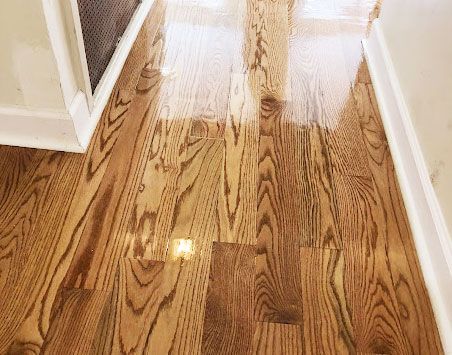
No Manhattan staining job is posted yet, so these gallery examples are captioned by type of work only. Full gallery →

What affects the cost
Staining depends mostly on the square footage and on how many test colors and coats you want. Extra steps like stairs, thresholds or repairs underneath are added only where they apply. You can get an instant preliminary estimate before we visit.
Frequently asked questions
Will my co-op allow an oil-based finish?
Some buildings discourage it because of odor in shared halls. Water-based polyurethane is the usual choice, and we check the alteration rules first.
Why does gray stain look pink on my oak floor?
Red oak has a pink undertone that shows through gray and light brown stains. White oak takes those tones more evenly.
Can new boards match an old Manhattan floor?
Usually, after testing stain on both. New wood sometimes needs a slightly adjusted mix to read the same.
Do you work in all Manhattan buildings?
We book floor staining in apartments, co-ops, condos and lofts across the borough. Call (718) 690-3435 and mention floor staining when you confirm your street.
See what our customers say