


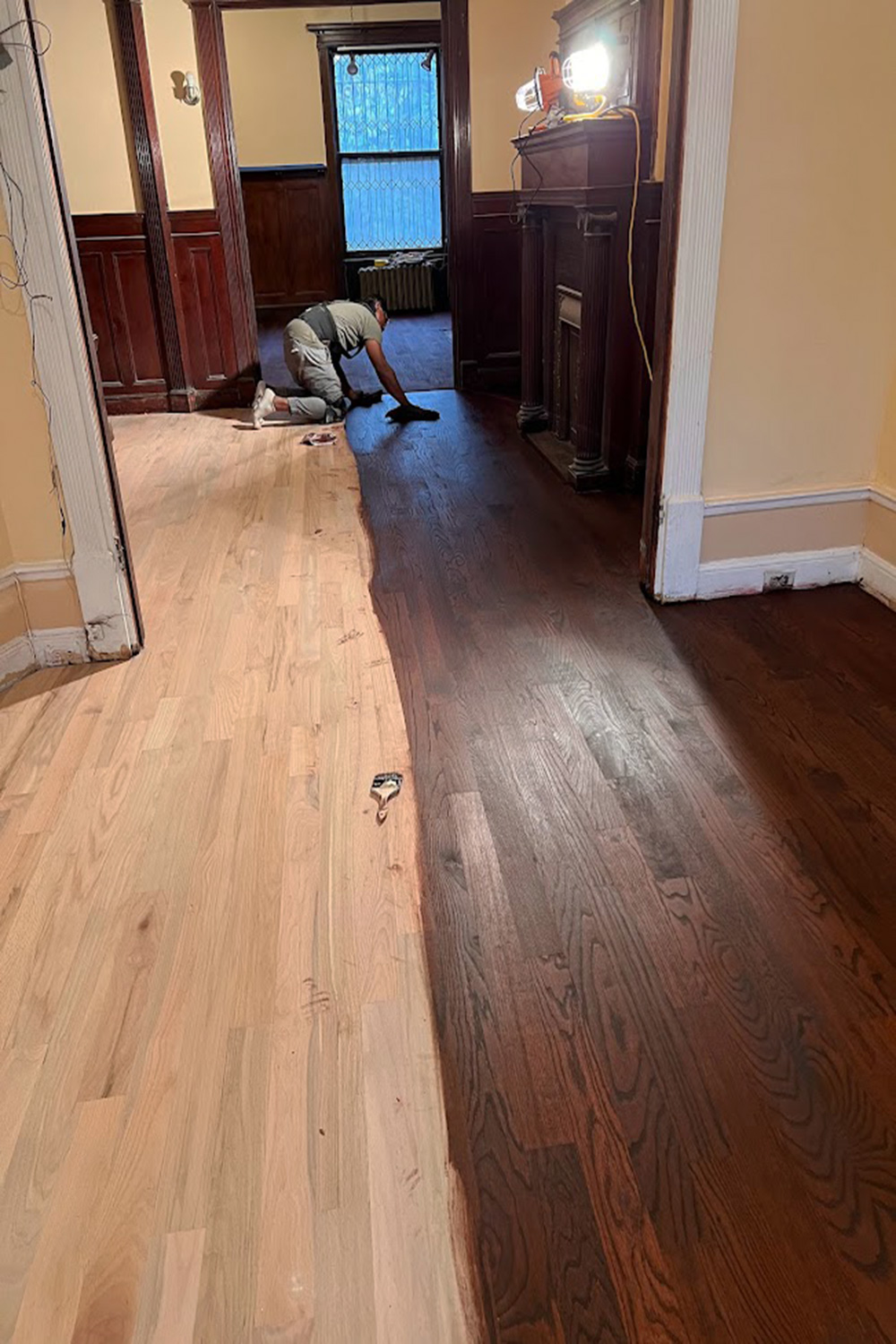
Brooklyn · stain colors, sealers & polyurethane
Hardwood floor staining & finishes in Brooklyn
Gemini Floor Services is a family-owned flooring company working out of 229 Sumter St in Bed-Stuy, which puts most Brooklyn blocks within a short ride of our shop. As your flooring contractor we take a tired or dated wood floor, sand it to fresh grain, lay down the color you picked from test patches, and seal it with the polyurethane that fits your household and your building. Owner Dyal Ramna brings more than 30 years in the trade to every color decision.
Neighborhoods we serve: Park Slope, Brooklyn Heights, Bay Ridge, Williamsburg, Bushwick, Prospect Heights, Flatbush, Sunset Park, Carroll Gardens, Midwood, Borough Park, Crown Heights, Bed-Stuy, DUMBO.
Color that suits a Brooklyn room
A stain changes the whole character of a room. Deep walnut makes a brownstone parlor feel formal, a soft natural tone opens up a narrow railroad apartment, and a pale gray or whitewash can freshen a Williamsburg loft with big windows. Because Brooklyn light varies so much from a north-facing garden unit to a top-floor walk-up with skylights, we never ask you to pick a shade from a printed card alone.
Staining is not a separate trade from refinishing. It sits in the middle of the job: the old coating comes off during sanding, loose or damaged boards get fixed, color goes on, and then protective coats seal everything. If your boards only need a fresh surface in their existing tone, our Brooklyn refinishing page explains that path.
Test patches on your own boards
Once the floor is sanded, we brush several candidate colors onto small areas of your actual wood. You look at them in morning and evening light, with your furniture and wall paint nearby, and choose. We carry the Bona DriFast and Minwax Wood Finish color charts to the visit so you can narrow the field first.
Species matters a great deal. Red oak has a pinkish undertone that can push gray and light brown shades toward a muddy look, while white oak accepts those cooler tones evenly. Maple and some exotic woods absorb pigment unevenly and can blotch, so we may suggest a lighter hand or a natural finish. Patched areas with newer boards soak up color differently from wood laid a century ago, and we test on both before the full room gets stained.
Floors that already carry a very dark color can take extra sanding to return to a light look. Boards sanded many times over the years may be thin near thresholds and radiators, which limits how far we can go. We tell you honestly on the visit what is realistic.
Choosing the protective coat
Water-based polyurethane
Low smell, clear color and quick dry times between coats. It keeps white oak and gray tones from yellowing, and it is the option most co-op and condo boards in Brooklyn Heights and DUMBO prefer, since neighbors share hallways and air.
Oil-based polyurethane
Gives wood a warm amber glow that many brownstone owners love on red oak. The odor lasts longer and furniture has to wait longer before going back, so it fits best in a house where the family can stay elsewhere for a few days.
Sheen level
Matte and satin hide scuffs and suit most homes; semi-gloss and gloss look dramatic but show every scratch and footprint. We bring sample boards so you can see the difference.
Number of coats
Most floors get a sealer plus multiple topcoats, with a light buff between layers. Kitchens, hallways and homes with pets or kids may call for an extra coat.
Future maintenance
A well-chosen finish can be screened and recoated years from now without a full sand, which saves time and keeps the floor thick enough for later refinishing.
Scheduling in houses, co-ops and condos
Each layer of stain and polyurethane needs time to dry with nobody walking on it, so we map out the sequence before work starts. In row houses in Park Slope, Bed-Stuy or Crown Heights, we often work floor by floor so the family can keep using part of the home. In apartment buildings we plan around elevator bookings, set work hours and alteration rules, and we are licensed and insured with the certificate your managing agent needs. Sanding uses dust-controlled equipment to keep debris out of hallways and neighboring units.
Our crew protects stairs, radiators and doorways, and we tell you exactly when socks, then shoes, then rugs and furniture can come back. Every job carries our 5-year workmanship warranty, as written on your estimate.
What affects the cost
Every staining job is quoted to the floor we see on the visit. These factors move the number:
- Area: total square footage, number of rooms, closets and halls.
- Floor condition: deep scratches, old dark color to remove, pet stains, and boards that need replacing first.
- Species: woods that blotch may need a conditioner or extra test patches.
- Finish system: water-based or oil-based polyurethane, and how many coats go on.
- Stairs and borders: treads, risers, nosings and inlays are handled as their own line.
- Access: walk-ups, elevator reservations and building work windows.
For a planning number, use our Instant Preliminary Estimate. We confirm the final quote after a free on-site measure.
Stairs, patterns and matching repairs
Staircases in brownstones are often the hardest part to color evenly, because treads, risers and railings may be different woods or have decades of wear. We sand and stain them to match the floors they connect. Herringbone and parquet can be stained too, though the changing grain direction means test patches matter even more; see our Brooklyn herringbone and parquet page. When new boards replace damaged ones, we blend the color so the patch disappears into the room. For a deeper look at products and color families, read our main wood stain and finishes guide.
Photos from our work
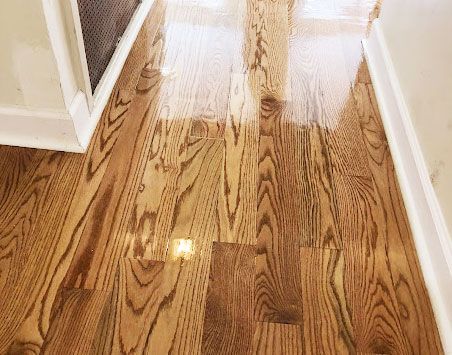
Photos from real Gemini staining and refinishing work, labeled by the type of work. Full gallery →

Frequently asked questions
Can I see the color on my floor before you stain the whole room?
Yes. After sanding we apply several test patches to your own boards, and you choose in your own light before we continue.
Why does gray stain look different on my red oak?
Red oak has a natural pink undertone that shows through cool colors. White oak takes gray more evenly. We test on your species so there are no surprises.
Is water-based or oil-based polyurethane better for my apartment?
Most Brooklyn co-ops and condos prefer water-based because it has low odor and dries fast. Oil-based gives a warmer amber tone but needs longer before you can move back in. We check your building rules first.
Can you make a very dark floor light again?
Often, but it can take extra sanding, and floors that have been refinished many times may be too thin. We look at the boards and tell you on the visit.
How long before I can walk on a freshly stained floor?
It depends on the finish and number of coats. We give you a clear timeline for socks, shoes, rugs and furniture before we start.
Can you stain stairs to match my floors?
Yes. Treads, risers and nosings can be sanded and stained to match, and they are quoted as a separate line.
Do you stain hardwood floors outside Brooklyn?
Yes. See hardwood floor staining in Manhattan, hardwood floor staining in Queens, hardwood floor staining in the Bronx, hardwood floor staining in Staten Island, hardwood floor staining in Nassau County and hardwood floor staining in Suffolk County.
Where can I see which Brooklyn neighborhoods you cover?
Our Brooklyn flooring by neighborhood page lists the areas we work in and links to local pages.
See what our customers say