


Manhattan · lofts, retail & commercial slabs
Epoxy flooring & polished concrete in Manhattan
Sound concrete in a loft, shop, or office can become the finished floor, or take a bonded epoxy system when the slab is worn. We plan grind work, resin ventilation, and building access with management before we start. NYC jobs are coordinated from our Brooklyn shop at 229 Sumter St. Gemini Floor Services is a family-owned flooring company, and you work directly with the flooring contractor from the first visit to the last room. Call (718) 690-3435.
Concrete polishing for lofts and retail floors
Polished concrete keeps the slab itself as the finished surface, with no thick resin overlay. Mechanical polish suits sound slabs that already have character, such as lofts, retail floors, and open-plan spaces where a low-build look fits better than a coating.
We work with progressive diamond tooling, a penetrating densifier that hardens the surface and reduces dusting, and optional stain or dye. Sheen runs from Class 1 flat to Class 4 high gloss, and aggregate exposure can stay at the cream or go deeper. Grind-and-seal is a lighter, faster path, but it needs periodic reseal.
Epoxy systems for worn or heavy-use slabs
Worn, cracked, or chemical-heavy slabs usually favor an epoxy overlay. The system stack is a primer that seals the concrete and protects the bond, epoxy build coats, and a clear urethane topcoat for durability and UV. Decorative flake, quartz, and metallic looks are available, as are self-leveling and epoxy mortar builds for heavy loads, slip-resistant textures, and ESD or anti-static systems where static is a hazard.
Working in occupied Manhattan buildings
Grind work
Dry diamond grinding with dust captured at the machine, when building rules allow grind work.
Resin odor
Ventilation windows for resin systems are planned with management up front.
Paperwork
We are licensed and insured and can provide the insurance paperwork buildings and landlords ask for.
Access
Elevator bookings, work hours, and hallway protection are set before the first day.
Slab checks before we commit
Almost any concrete can take epoxy when properly prepared, but heavily cracked or unstable slabs may not qualify, and moisture drives the primer choice. New concrete should not be polished or sealed until it is fully cured, often 30 to 60 days, with a moisture meter check. Joints, cracks, and pits are epoxy-filled as needed, and old coatings are ground off. Side-by-side guidance is on our main epoxy and polished concrete page.
Photos from our work
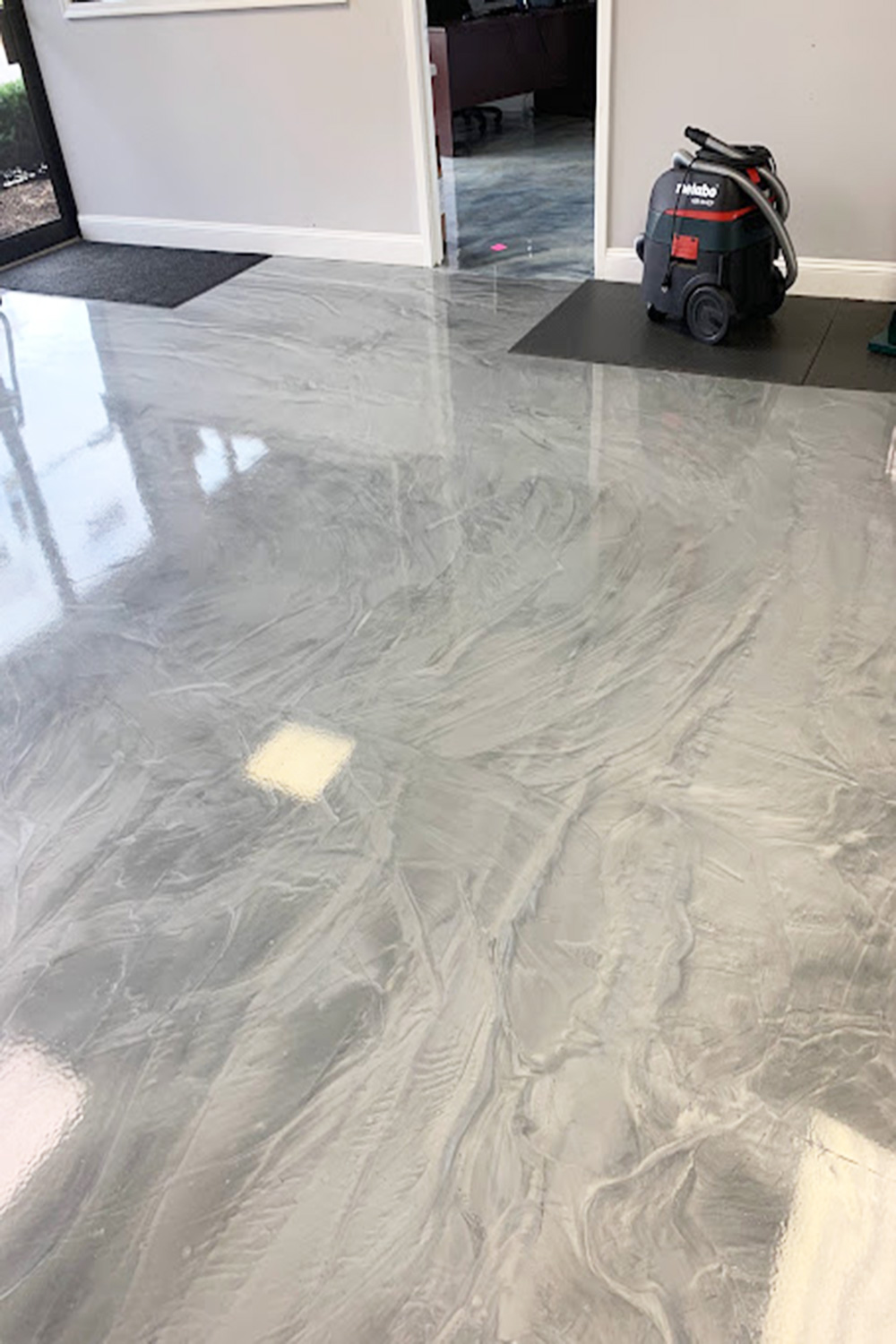
An example of our epoxy work. Manhattan concrete photos will be added as they are documented. Full gallery →
What affects the cost
For concrete, the slab size and its condition matter most, since cracks, old coatings and patches all need grinding or repair first. Extra steps like thresholds or repairs underneath are added only where they apply. You can get an instant preliminary estimate before we visit.
Frequently asked questions
Should I choose epoxy or polished concrete?
Sound slabs that want a permanent, low-build look usually favor mechanical polish. Worn or pitted slabs, chemical exposure, and decorative flake or metallic looks usually favor epoxy.
Can you grind concrete in an occupied building?
Yes, when building rules allow it. We capture dust at the machine and plan work hours and hallway protection with management.
Do you do commercial spaces as well as lofts?
Yes. Commercial scope includes shops, showrooms, offices, warehouses, and food-service back-of-house.
How is the schedule set?
Prep, system layers or grit classes, square footage, and cure windows set the schedule. We confirm it on the free on-site visit after the Instant Preliminary Estimate.
See what our customers say