


Case study · Flatbush, Brooklyn
Matching hardwood floors in a Flatbush house
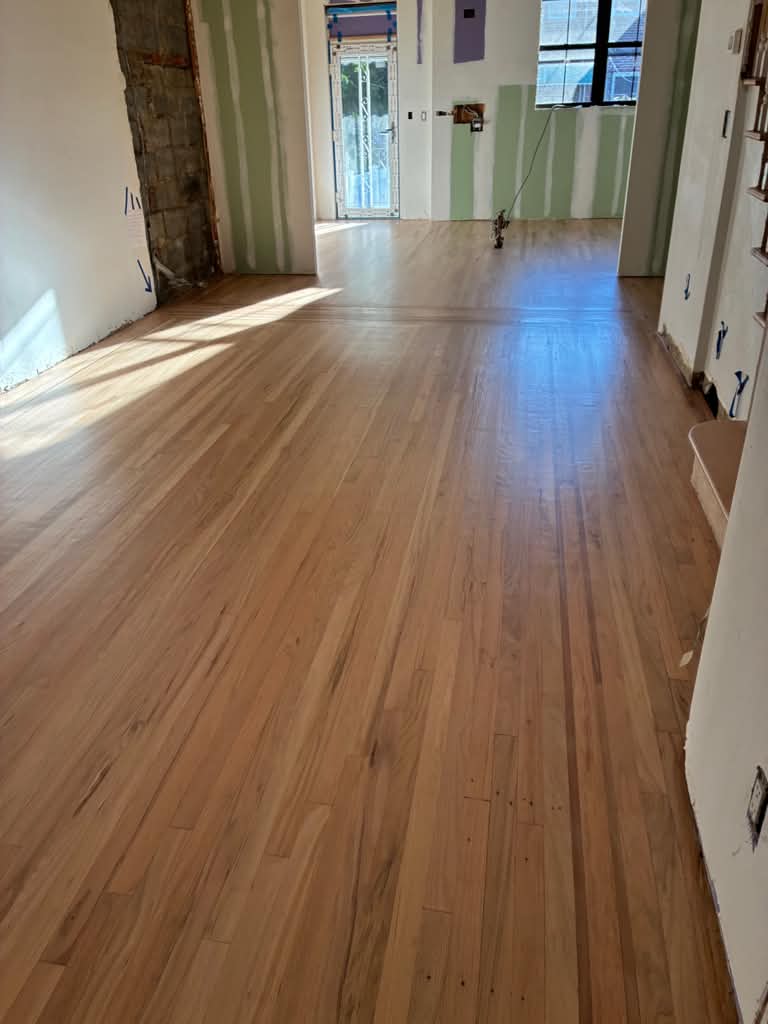
A house in Flatbush needed a complete flooring change-out across several rooms. The job was to make the downstairs floor, the staircase, and the upstairs floor work together, not to make three separate floors that only look right on their own.
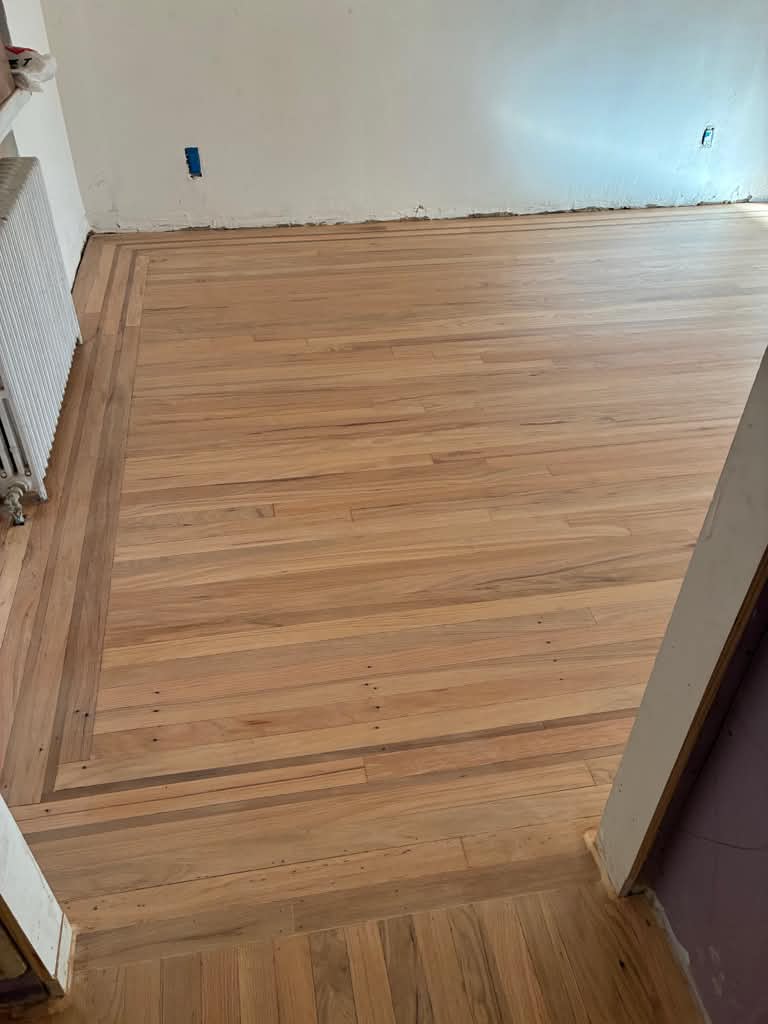
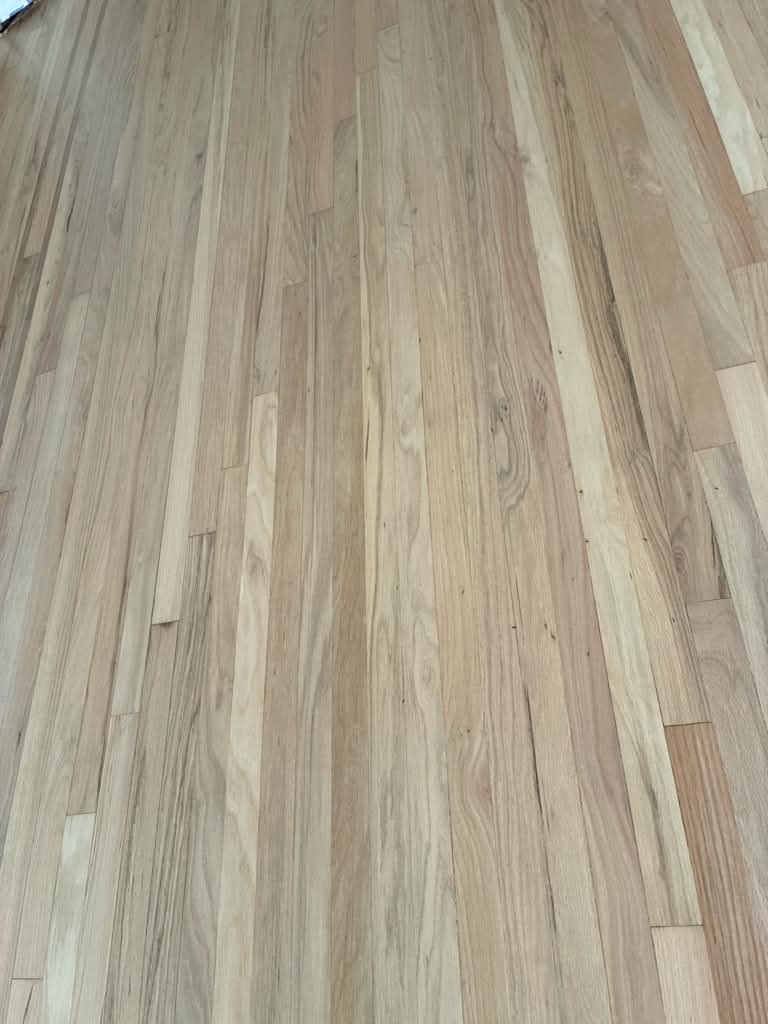
Before and after
The finish
The first coat is Bona Nordic Seal. Then three coats of Bona HD satin.
The wood was not all the same
When a homeowner asks Gemini Floor Services to refinish or restore hardwood, sanding and a new finish often are not enough. The harder part is matching the color and the look of the floors around it. This Flatbush house was that kind of job.
The upstairs flooring was rift-cut red oak. In rift-cut oak the grain runs more vertically, and the boards read differently from other cuts. The staircase was red oak too, but a different cut. The same stain or sealer can soak in and reflect light differently on those two cuts.
Two pieces of red oak can look close before they are finished. After sanding, staining, and sealing, differences in grain, age, cut, and how the wood takes color show up. Homeowners often do not see that until the work is underway.
Matching color is more than finding a stain
The hard part was a color that would sit with the existing upstairs floor and still look natural on the downstairs floor and the staircase. The crew tested stain and sealer combinations. They did not pick a color off a chart and stop there.
The existing floors already had a history. Age, earlier finishes, natural oxidation, grain, and how much light a room gets all change the color. A sample that looks right on a small piece of new wood, or on freshly sanded wood, will not always look the same on another part of an older floor.
The staircase
The stairs needed their own attention. One option considered was Bona Red Out, to reduce the red tones in the stair treads. Taking too much of the red out of the staircase could have put the stairs at odds with the upstairs floor.
The staircase did not have to win on its own. The aim was a natural step from the downstairs floor, up the stairs, and onto the upstairs floor.
The closest match can take more work
Getting as close as the wood allows can mean more sanding and more testing. An older floor will not always take color the way a new board does. When a house has different cuts, ages, or conditions of wood, a perfect match can be impossible.
The work is to know that limit, say so, and then get the closest natural match the wood will give.
What the finished floor has to do
A floor like this can take hours of testing, sanding, comparing samples, adjusting color, and looking at the boards in different light. That part happens before the floor reads as one house.
The aim was not floors that look artificially identical. It was a natural transition from the downstairs floor to the staircase to the upstairs floor, without fighting the wood that was already there. Matching hardwood is a craft as much as it is a technical process.
Frequently asked questions
What finish went on the Flatbush floors?
The first coat is Bona Nordic Seal. Then three coats of Bona HD satin.
Why was matching the upstairs floor and the stairs hard?
The upstairs flooring was rift-cut red oak. The staircase was red oak too, but a different cut. The same stain or sealer can soak in and reflect light differently on those two cuts.
Was Bona Red Out used on the stairs?
It was considered, to reduce the red tones in the stair treads. Taking too much of the red out could have put the stairs at odds with the upstairs floor. The aim was a natural step from the downstairs floor, up the stairs, and onto the upstairs floor.
Can different red oak floors be matched exactly?
When a house has different cuts, ages, or conditions of wood, a perfect match can be impossible. The work is to know that limit, say so, and then get the closest natural match the wood will give.
Related work: hardwood floor refinishing and wood stain and finishes.
Gemini Floor Services · 229 Sumter St, Brooklyn NY 11233 · (718) 690-3435 · Nassau (516) 209-6998 · Suffolk (631) 739-8353 · info@geminifloors.com